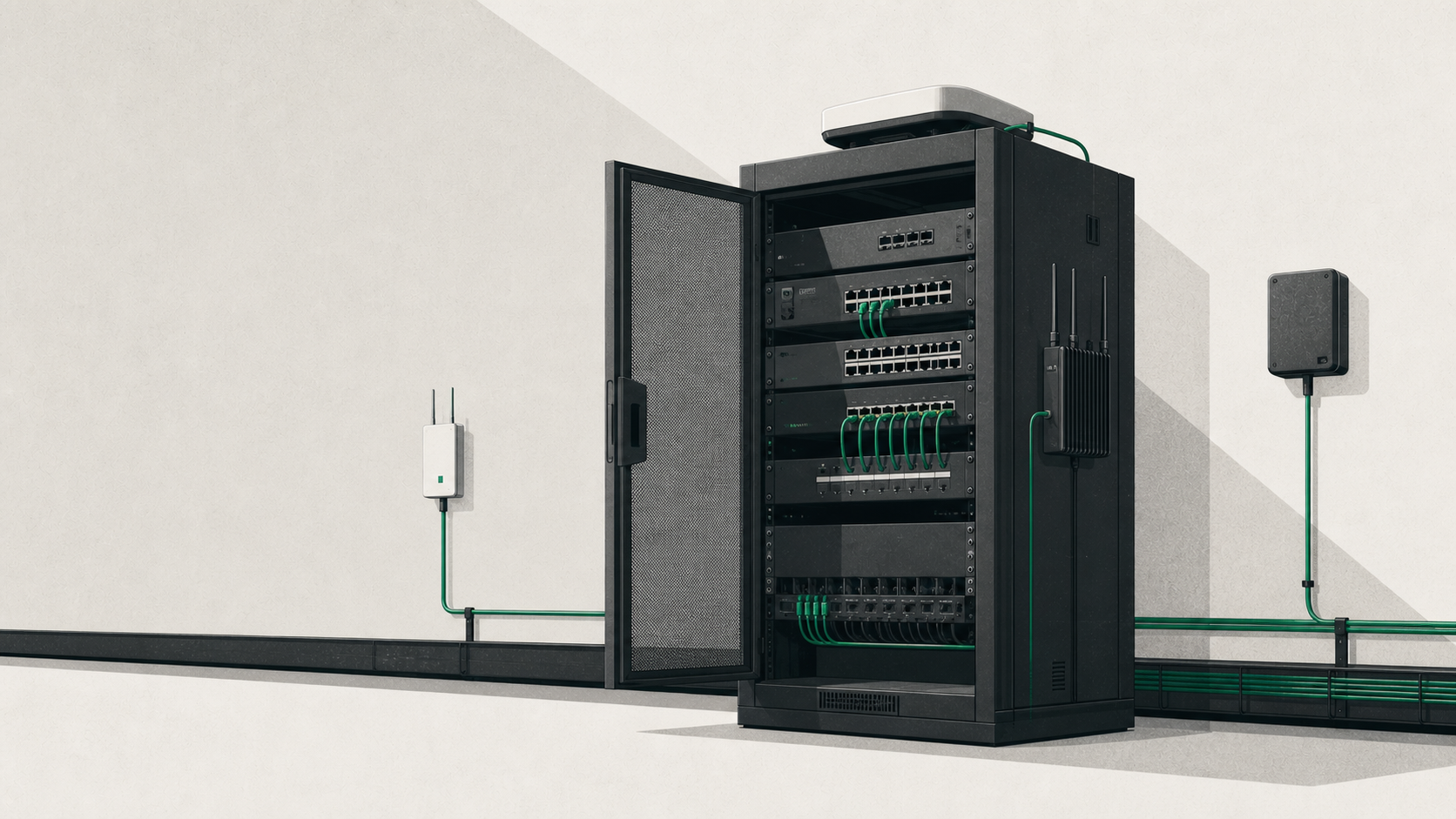

Satellite & Remote Connectivity
Primary, backup, and temporary access for remote sites, mobile operations, and locations where terrestrial service is impractical.
- Coverage & service fit
- Terminal & local network
- Deployment conditions
LYNQNET helps enterprises, operators, integrators, and technology companies qualify, source, and coordinate connectivity infrastructure across markets.
Satellite & remote connectivity · Enterprise networks · International sourcing · Integration coordination
Company overview
LYNQNET acts as the commercial and coordination layer between an operating requirement, the technology source, and the delivery ecosystem.
Depending on scope, engineering, installation, logistics, and support may be delivered directly or through qualified partners—with responsibilities defined before execution.
Explore the solution portfolioTranslate locations, coverage gaps, resilience needs, environmental conditions, and operating priorities into a defined technology requirement.
Access · Network · Site conditionsQualify product categories, regional variants, accessories, quantities, supply conditions, documentation, and the confirmed basis of supply.
Variants · Availability · Commercial basisAlign configuration, staging, logistics, site readiness, specialist partners, acceptance evidence, and handover responsibilities.
Readiness · Responsibilities · HandoverConnect technology relevance with route-to-market decisions, partner capability, qualified opportunities, and an executable delivery model.
Market fit · Partnerships · Opportunity formationCommercial & delivery capabilities
Four capabilities sit behind every engagement. Select the area closest to your requirement to see what LYNQNET needs, coordinates, and defines before work moves forward.
01Commercial
Source the complete requirement—not just the part number.
02Technical delivery
Connect compatible technology layers with the people and evidence required for deployment.
03Physical delivery
Plan the physical and commercial route from source to site.
04Market development
Build the market path around relevant technology and deliverable opportunity.
How LYNQNET works
One connected process turns open assumptions into qualified decisions, defined responsibilities, and visible project outputs.
Discuss a delivery requirementExplore the process→
Define the operating environment, business objective, constraints, stakeholders, and delivery requirements.
Select the appropriate access, network, infrastructure, and partner layers for the project.
Coordinate availability, commercial terms, product variants, documentation, and supply conditions.
Align equipment, services, validation criteria, responsibilities, and specialist partners.
Manage logistics and deployment coordination through visible milestones and accountable ownership.
Coordinate documentation, ownership, acceptance, and the appropriate route for ongoing support.

Satellite & remote operations
Satellite connectivity can provide a rapid path to primary, backup, or temporary communications where terrestrial options are limited, slow to deploy, or operationally impractical.
LYNQNET evaluates the link as part of a complete site requirement—including terminal and service fit, local networking, supply readiness, deployment conditions, and lifecycle responsibility.
What determines fit
Typical starting points
A project does not need to arrive as a finished specification. LYNQNET can begin with an operating problem, a defined product requirement, or a market opportunity.
A remote, temporary, mobile, or underserved operation needs connectivity, but conventional access is unavailable, slow, or commercially impractical.
Qualify the access requirement, surrounding network, site conditions, supply path, and delivery responsibilities.
A product category or bill of materials is known, but variants, accessories, quantities, availability, documentation, or destination conditions remain open.
Turn the request into a commercially and operationally qualified sourcing scope before commitment.
A manufacturer, distributor, operator, or integrator needs the right use cases, partners, commercial model, and delivery capability for a market.
Connect the technology proposition with a relevant ecosystem and opportunities that can become deliverable business.
Who we serve
LYNQNET supports enterprises, operators, system integrators, infrastructure delivery partners, and technology companies that turn complex requirements into working systems.
Enterprises
Enterprise connectivity decisions must balance availability, security, manageability, deployment conditions, and business continuity across different locations.
Define the requirement, identify appropriate technology categories, coordinate supply and specialist partners, and structure a controlled path to deployment.
Typical priorities
Operators & service providers
Operators may require new access technologies, customer-premises equipment, resilient service components, or commercially viable ways to reach specific locations.
Connect technology sourcing, solution context, project logistics, market development, and qualified partner resources around the service objective.
Typical priorities
System integrators
Integrators may have the customer context and delivery capability but need specific technologies, international supply paths, project logistics, or complementary expertise.
Work as a transparent supporting layer around sourcing, solution definition, partner alignment, and logistics—without displacing the integrator’s customer role.
Typical priorities
Infrastructure delivery partners
Infrastructure projects can require rigorous qualification, documentation, procurement alignment, specialist resources, and clear long-term responsibility.
Help define technology and delivery workstreams, coordinate the appropriate commercial and specialist ecosystem, and make scope and ownership visible.
Typical priorities
Manufacturers & distributors
Technology companies entering new markets need relevant use cases, qualified opportunities, capable partners, and an executable route from demand to delivery.
Develop a structured market path connecting the technology proposition with project requirements, partner ecosystems, and commercial priorities.
Typical priorities
For manufacturers & technology companies
Strong technology does not enter a market through introductions alone. It needs relevant use cases, a credible commercial model, capable partners, qualified opportunities, and a path to delivery.
LYNQNET helps structure those elements around a defined market or opportunity—without implying representation, authorization, or exclusivity unless it is formally agreed.
Discuss a technology partnershipAssess where the technology addresses a meaningful operating problem and what must be true for credible adoption.
Define the commercial, technical, channel, support, and governance conditions required for the target market.
Bring the relevant technology, customer context, delivery resources, and decision makers around a qualified requirement.
Commercial clarity
Trust in international technology business depends on knowing what is verified, what is included, who is responsible, and which decisions remain open.
LYNQNET structures each proposal around the confirmed requirement rather than allowing category language, partner logos, or assumptions to stand in for evidence.
Product origin, channel status, availability assumptions, commercial validity, and regional eligibility are stated for the specific proposal.
Direct LYNQNET work, customer responsibilities, and third-party engineering, logistics, installation, or support roles are identified before execution.
Warranty route, service eligibility, replacement process, and ongoing support responsibility are confirmed rather than implied.
Assumptions, exclusions, specialist reviews, and customer decisions remain visible until they are resolved or explicitly accepted.
Manufacturer authorization, product origin, regional eligibility, and third-party responsibilities are confirmed for the specific scope and are never inferred from a technology category alone.
Start with the requirement
Tell us the intended outcome, location or market, timing, known technology decisions, and the next decision that needs to move forward.